EU-LIFE Connects Science brings researchers together for focused exchange at NKI
EU-LIFE and the Netherlands Cancer Institute (NKI) successfully piloted the EU-LIFE Connects Science 2026 programme, a new initiative designed to stimulate direct, targeted scientific exchange across the EU-LIFE community. Hosted by NKI in Amsterdam, the programme welcomed 11 participants from 10 EU-LIFE institutes, including PhD students, postdoctoral researchers, and core-facility experts. Each participant was matched with an NKI research group or infrastructure according to their scientific interests, technical needs and professional goals.
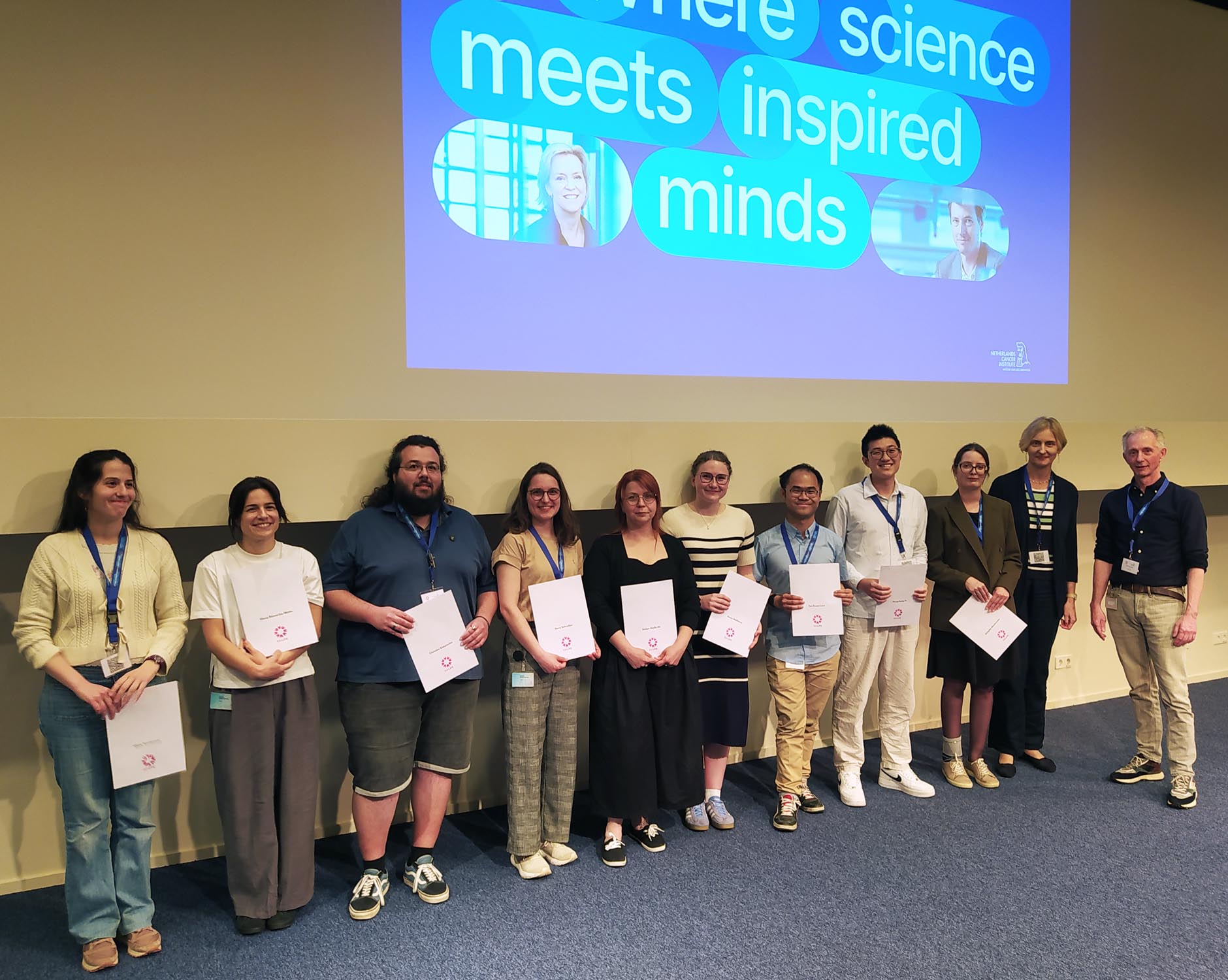
The aim of EU-LIFE Connects Science is to create short, focused visits that make meaningful scientific interaction possible, whether by learning a new technique, exploring a facility, developing a collaboration, gaining insight into another research environment, or preparing for a next career step. The programme builds on EU-LIFE’s strong tradition of exchange across its member institutes, including mentoring, postdoctoral mobility and visiting scientist formats.
Participants pursued activities across a wide range of fields, from structural biology and AI for oncology to protein facilities, biophysical services, health technology assessment, immuno-oncology and translational cancer research. The diversity of profiles and disciplines was one of the strengths of the pilot, creating space not only for technical learning, but also for interdisciplinary exchange and informal networking.
“The visit broadened my horizons, inspired me, and led to many valuable new connections,” said Anna Molíková, from CEITEC, who joined Jonas Teuwen’s AI for Oncology research group. During her stay, she exchanged ideas and PhD experiences with NKI researchers and explored ongoing projects in the group.
For Yee Kwan Law, a PhD student at CeMM, the programme offered the chance to spend time in the lab of Anastassis Perrakis and explore new perspectives at the intersection of structural biology and functional genomics in collaboration with in-house facilities. The visit also allowed him to explore possible postdoctoral opportunities in preparation for the next stage of his scientific career. “The programme helped broaden my scientific horizons about how structural biology can be used to systematically uncover transcription factor biology, while also building new connections at NKI as well as across the broader EU-LIFE network,” he shared after the visit.
EU-LIFE Connects Science also proved valuable for research facilities and technical experts. Matylda Wacławska-Sankowska, Expert at the Biophysics and Bioanalytics Facility at IIMCB, visited NKI’s Protein Facility, where she focused on workflow optimisation, assay development and data analysis. “My stay at NKI thanks to EU-LIFE is a valuable experience that combines technical training with meaningful discussions between research facilities on workflow optimization, assay development, and research support strategies, and it will directly support the development of biophysical services at our institute,” she said. Reflecting on the practical impact of the visit, she added that the experience gave her first-hand insight into refining workflows and preparing for new equipment at her home institute — bringing back “sparkles of inspiration and knowledge.”
For Nora Schreiber, from the Institute for Molecular Medicine Finland (FIMM), the visit was an opportunity to step outside her usual field of biomedical science and bioinformatics. Hosted by Valesca Retèl’s Health Technology Assessment research group, she discussed her work with researchers and clinicians across NKI and explored the economic, ethical and legal aspects of healthcare developments. “The program provides a valuable opportunity not only to connect people and institutes, but also to bring together different disciplines,” she said. “I returned with many new ideas — and a few additional puzzle pieces that will help me better understand the bigger picture of my own research.”
The programme also created space for participants to reflect on the broader value of scientific mobility. Hongchang Fu, representing the Francis Crick Institute, joined Daniela Thommen’s lab and described the experience as both scientifically enriching and deeply enjoyable. “I shared a metaphor taking academic exchange as a form of pollination,” he said. “The ideas, techniques, and perspectives we carry as participants may sometimes seem small or even go unnoticed by ourselves. Yet, like pollen carried by bees, they may become valuable to other institutes just as their own unique strengths and insights can be equally enriching to us. Through this mutual exchange, new ideas can bear fruit as scientific outputs.”
Alongside their individual visits, participants connected with one another and joined selected moments of the wider EU-LIFE Community Meeting 2026. On the final day, some of them shared their experiences during the plenary session, bringing the perspective of the visiting scientists into the broader EU-LIFE discussions.
The success of the pilot highlights the value of short, well-focused scientific visits as a catalyst for collaboration. By opening research groups and facilities to colleagues across the alliance, EU-LIFE Connects Science strengthens mutual awareness of the expertise, infrastructure and scientific cultures within the EU-LIFE community.